
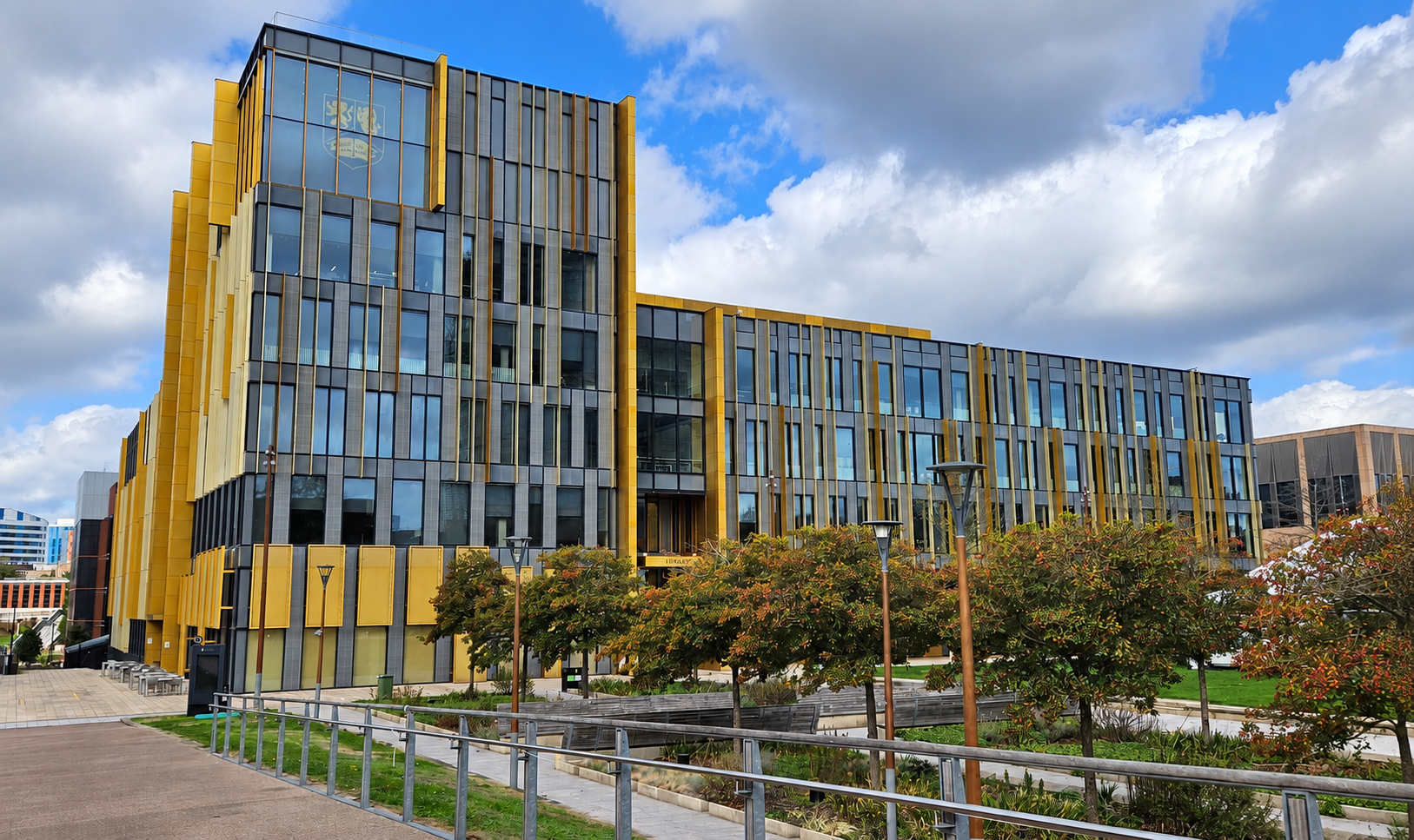
Walking around the campus of the University of Birmingham after ICEF Higher Education in London, I found myself thinking about a small survey I had conducted thousands of kilometers away in Bishkek.
One of my onboarding questions asks students which three countries they would most like to study in. When I recently asked this at a well-established private international high school in Bishkek, 20 out of 26 students named China as their first choice.
I was shell-shocked. But perhaps I shouldn't have been.
This year, I am involved in advising and placing around 200 graduating students across Central Asia. I spend a considerable amount of time talking to sixteen- and seventeen-year-olds about where they see themselves studying and living. And something is changing.
China is the most striking part of it, but it is not the whole story.
Why China?
Many of the young people I work with are watching China's progress in electric mobility, AI, robotics and engineering. Increasingly, technological advancement is being read as evidence of scientific and educational advancement. In their eyes, China is becoming somewhere where the future is being built.
The universities themselves support that perception.
The 2026 Academic Ranking of World Universities (ARWU), a particularly research-heavy ranking, places 16 mainland Chinese universities among the world's Top 100. Tsinghua is 18th, Peking 22nd, Zhejiang 24th and Shanghai Jiao Tong 27th.
Then comes the economics.
International tuition at many of these universities remains remarkably competitive. Across regular undergraduate programs at leading Chinese universities, fees frequently fall around US$4,000–5,000 per year, although there are significant exceptions, particularly for some English-taught and specialist programs.
Compare that with an ordinary US community college, where an international student can easily face annual tuition of around US$12,000–15,000.
It creates an extraordinary comparison: a student can potentially attend a Chinese university ranked among the world's Top 100 for roughly one-third of the tuition of an ordinary US community college.
And then there are scholarships.
China has built a scholarship landscape that extends well beyond the Chinese Government Scholarship. Provincial and municipal governments run their own schemes, as do individual universities. Taken together, I estimate that these programs may provide around 25,000–30,000 new comprehensive scholarships for international students each year.* Many of the full awards cover tuition, accommodation, medical insurance and a monthly living stipend.
That combination — globally competitive universities, visible technological progress, comparatively low tuition and substantial scholarship opportunities — is difficult for internationally minded families to ignore.
Central Asia's map is changing
What makes this particularly interesting from a Central Asian perspective is where the region has come from.
For decades, Russia exercised an extraordinary gravitational pull-on student mobility. World Bank analysis based on UNESCO Institute for Statistics data found that 78% of Kazakhstan's outbound tertiary students went to Russia. For Kyrgyzstan the figure was 54%, and for Uzbekistan 31%.
Those numbers reflect more than university choice. They reflect language, history, family networks, geographical proximity and decades of institutional relationships.
This is where mobility becomes interesting anthropologically.
Students do not choose destinations from a neutral global catalogue. Certain places already exist in their imagination as natural possibilities. Parents know people who studied there. Schools understand the admissions system. Languages are familiar. Degrees are recognized. There may be relatives or communities already there. Over time, an educational route becomes normal.
And normality can be remarkably powerful.
But it can also change.
The contrast with my own students is striking. Over the past year, across the students I have worked with in Kyrgyzstan and Kazakhstan, I can recall only one student who actively wanted to study in Moscow. Beyond that single case, Russia has barely appeared as a preferred study destination.
This is, of course, an observation from my own advising cohort, not evidence that Central Asian student mobility to Russia has completely disappeared. It clearly has not. But set against Russia's historical dominance in the region, the contrast is difficult to ignore.
What has changed is the range of places young people now imagine as realistic options.
The United States still carries enormous prestige, but I hear considerably more hesitation around cost, visas, immigration and the wider political environment. Over the previous two years, Qatar and the UAE — particularly Doha and Abu Dhabi — appeared regularly on students' lists. This year, amid conflict and instability across the wider Middle East, I am seeing more hesitation there too.
Meanwhile, China, South Korea, Hong Kong and Continental Europe appear with increasing frequency.
Europe is especially interesting because its proposition is almost the opposite of the traditional high-cost international education model. Germany's public universities generally charge no tuition, with some exceptions. Austria and parts of Southern and Central Europe can also offer substantially lower tuition than the major English-speaking destinations.
This matters because affordability has become central to mobility decisions. The OECD's latest research on international student mobility, published in September 2026, points to global surveys in which more than two-thirds of prospective international students identify affordability as a primary consideration when choosing where to study. The economics also differ dramatically: the major English-speaking destinations generally combine relatively high tuition with high living costs, while several Continental European systems retain low or negligible tuition even for international students.
Students notice these differences.
They can now compare ten countries in an afternoon: university rankings, tuition, scholarships, accommodation, visa requirements, employment prospects and whether a degree is available in English.
The old hierarchy has not disappeared. But students have far more alternatives to it.
Before students become statistics
There is an advantage to talking to students before they become statistics.
International mobility data necessarily look backwards. They tell us where students enrolled, often a year or two after the decisions themselves were made.
Conversations with students reveal something different: where they are beginning to imagine their futures.
A study destination is never simply a university ranking or a tuition figure. It is an imagined future: a profession, a language, a city, a technological environment, a sense of belonging and a judgment about where opportunity might be moving.
That is why I think what we are seeing in Central Asia is more interesting than simply the rise of China.
It is a redistribution of academic aspiration.
For universities, particularly in established study destinations, that deserves attention. Reputation remains enormously important. But reputation now competes with affordability, scholarships, employability, immigration rules, technological dynamism and a much wider choice of credible universities.
The question is therefore no longer simply whether students in Central Asia want an international education.
They do.
The more interesting question is where they now believe an international education can take them.
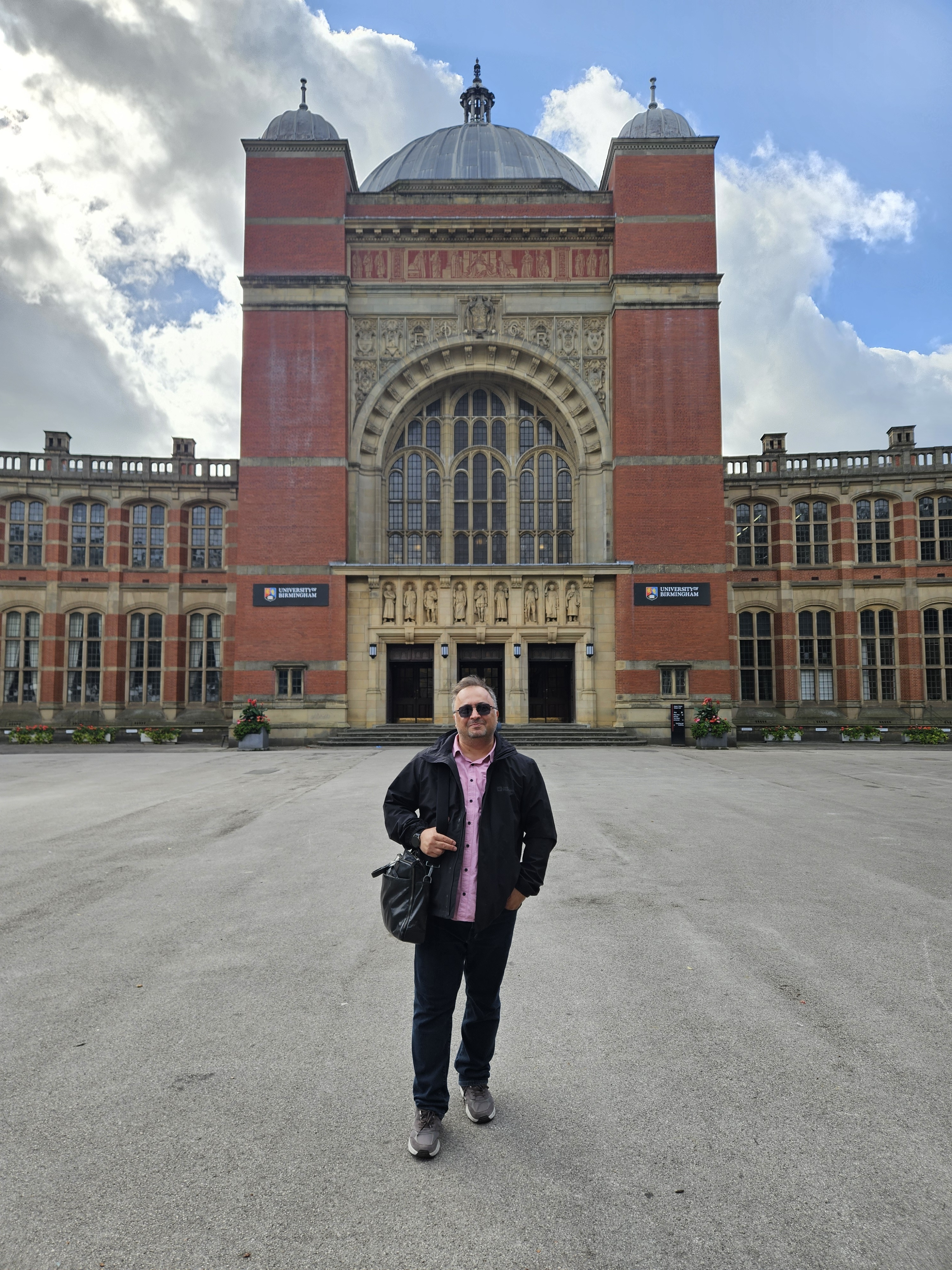
As I walked around the University of Birmingham, I kept returning to those 26 students in Bishkek.
The buildings around me represented centuries of Western academic prestige.
The answers on my onboarding form represented something else: where the next generation thinks the future might be.
* There is no single published total covering China's central-government, provincial, municipal and university scholarship schemes. The 25,000–30,000 figure is my estimate based on the scale and structure of these programs, rather than an official national count. As a current benchmark, China's Ministry of Education reported in December 2025 that around 9% of international students in China receive Chinese Government Scholarships; separate provincial, municipal and university schemes are not included in that figure. ↩
Sources & Further Reading
- World Bank — Towards Higher Education Excellence in Central Asia
- UNESCO Institute for Statistics — International Student Mobility Data
- OECD — International Student Mobility: Factors for Attraction and Retention (2026)
- ShanghaiRanking — Academic Ranking of World Universities 2026
- Ministry of Education of China — Chinese Government Scholarship data (2025)

Do you have a question or comment you would like to share with the author? Leave it below.